020 7351 0488


A bra band that rides up is irritating at the best of times. After breast surgery it can feel even more uncomfortable, because swelling, dressings and sensitive skin make every little shift more noticeable. The fix is usually simple once you know the cause, and is often simply a case of wearing the wrong bra size. A rolling band almost always means the bra is not anchored securely around your ribcage.
This guide explains why bra bands ride up, what issues cause bras to ride up at the back or front and how to find the right post surgery bra size. It also offers practical steps to keep your bra level and supportive during recovery.
Why does my bra band ride up?
The band is the part of the bra that wraps around your underbust, meaning the area directly under your breasts. It should sit level all the way around. When it climbs, it is sliding to a narrower point on your torso because it cannot grip where it should.
A bra rolling up is typically due to:
- Band too tight
- Band too loose
- Straps too tight
- Worn out elastic
- Wrong style for your shape
After breast surgery, swelling can temporarily change your size, so a bra that felt fine last week can start shifting today.
If your bra rides up at the back
When the band rises between your shoulder blades, the band is usually too big. Many people tighten the straps to compensate, which pulls the back band up even more.
The band is too big
A supportive band feels snug rather than loose or tight. Typically, you should be able to slide two fingers under the bra band, but not your whole hand. If you can pull the band far away from your back, it is probably too loose.
However, bra fit is relative. Another way to check if the band is too big on your post surgery bra is to see how it moves with your body. If the band moves with your body, particularly when moving to the sides, or it shifts when you raise your arms, then it is likely too loose.
Take a look at our sizing video for tips.
The straps and elastic are working against you
If your bra straps leave deep marks or your shoulders ache, they are likely too tight, and that upward pull lifts the band. If you also need the tightest hooks to get support, the elastic is probably stretched and no longer holding the bra band in place.
If your bra rides up at the front
A bra can lift at the front at the top of the abdomen, especially when sitting. You may notice the underband creeping up and that you need to constantly pull the band down, or you find the band rubs against your incisions rather than staying in place. This means the bra is too small. and usually gets better when you fasten on the loosest hook, or size up.
How to stop your bra band rolling up
Most fixes come down to size, adjustment and bra condition. This applies to all our post surgery bras.
1) Get the right size bra
To ensure you get the right size post surgery bra, use a soft tape measure to measure your underbust. Measure snuggly around your ribcage directly under the breasts and keep the tape level to get an accurate measurement.
Your underbust guides band size. Add 2 inches to your measured underbust and round up to the next band size to get the right compression bra. For example, if you measure 31 inches under the bust, add 2 inches to make 33 inches. That would mean the correct macom® bra size for you is the 34 - Medium.
Post surgery note: swelling changes over weeks, so adjustability matters. A bra with 2 rows of fastening can help you stay comfortable as your body settles
2) Adjust in the right order
Fit the band first, then cups, then straps.
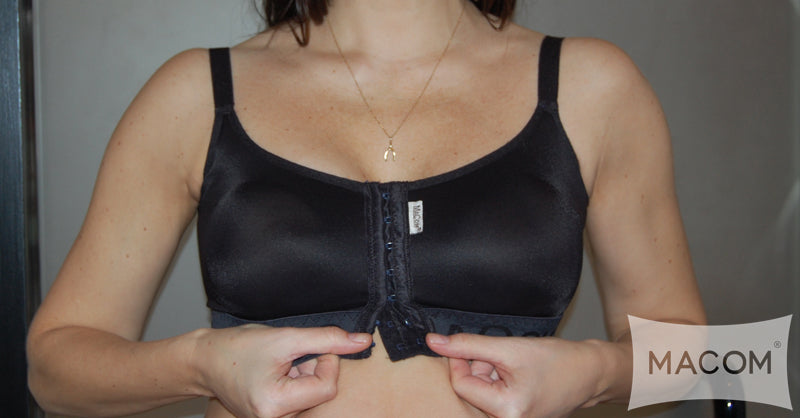
- Fasten on the loosest hooks.
- Guide breast tissue fully into the cups.
- Adjust straps so you can slide two fingers underneath at the shoulder.
- Recheck the band in a mirror. It should stay level when you move, sit and do everyday tasks. If the band is too tight, you'll be able to see it and it will feel like it's digging in around the band area.
3) Pick a recovery friendly bra style
After breast surgery, support should feel stable, not aggressive. From our experience, the best post operative bras share a few features:
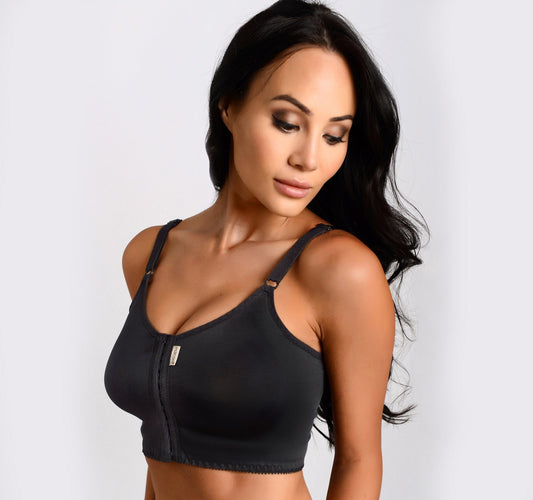
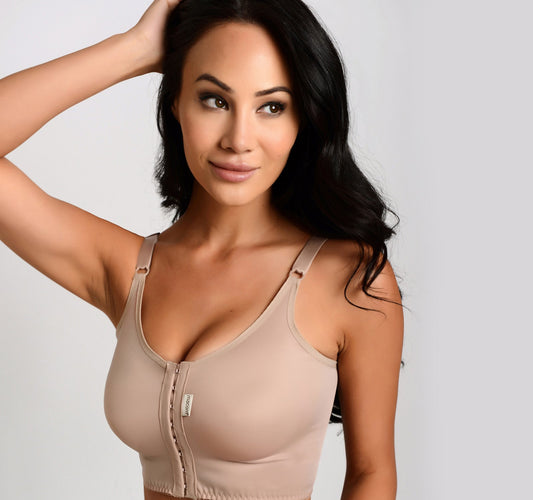
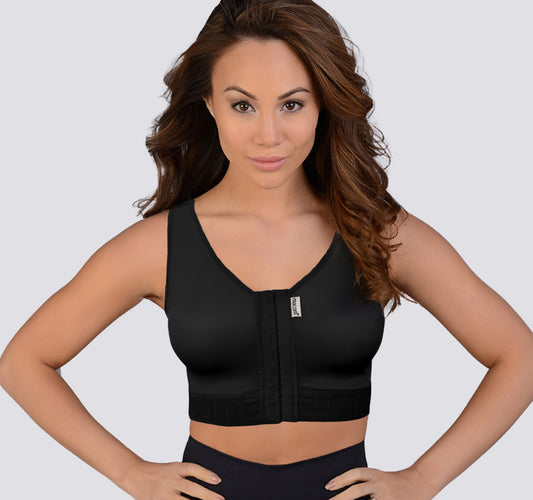
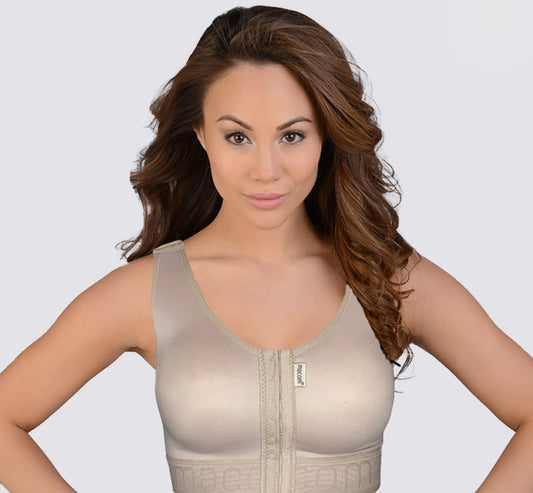
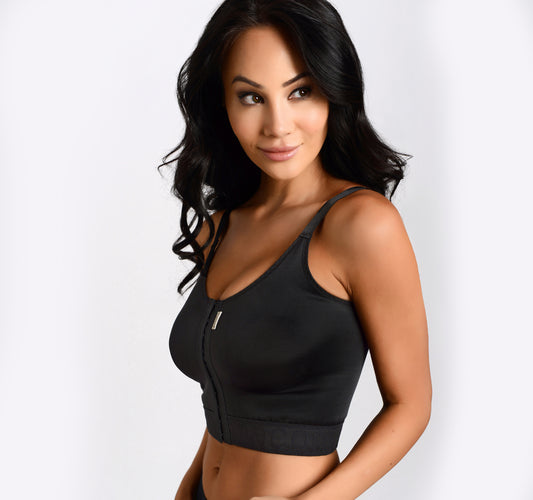
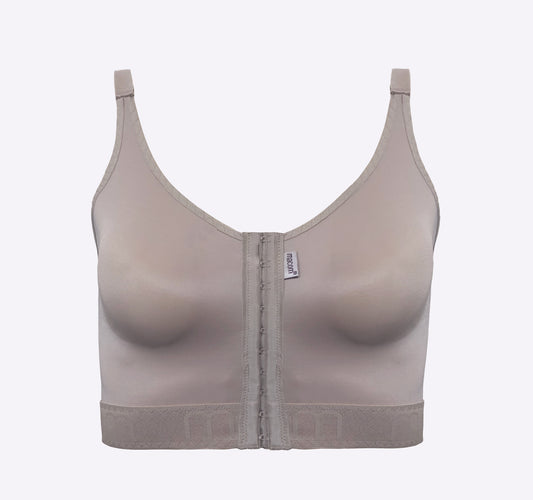
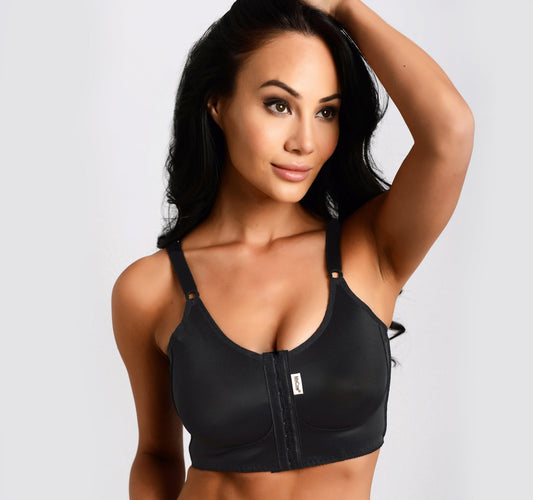
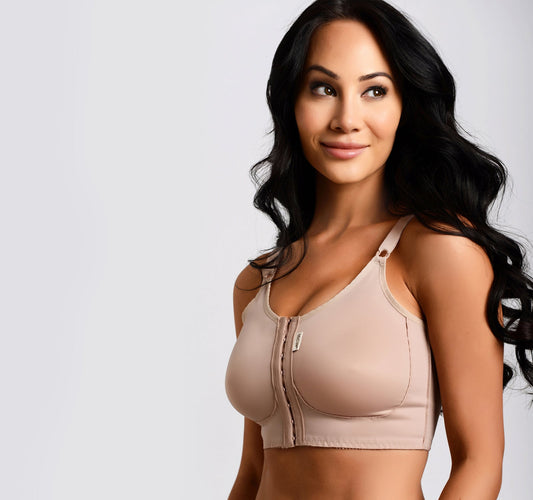
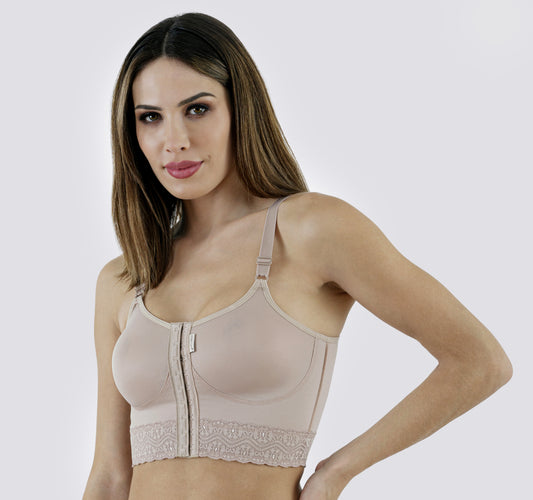
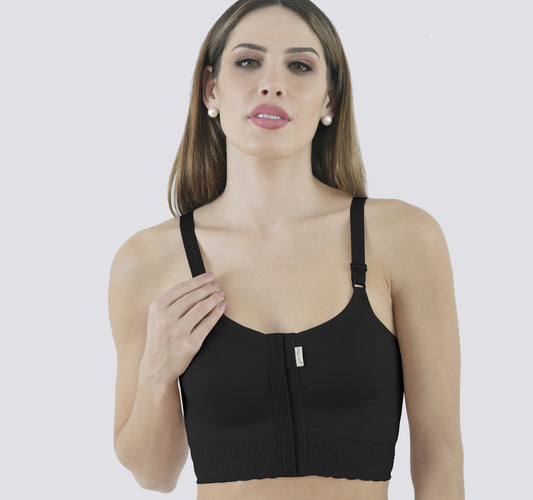
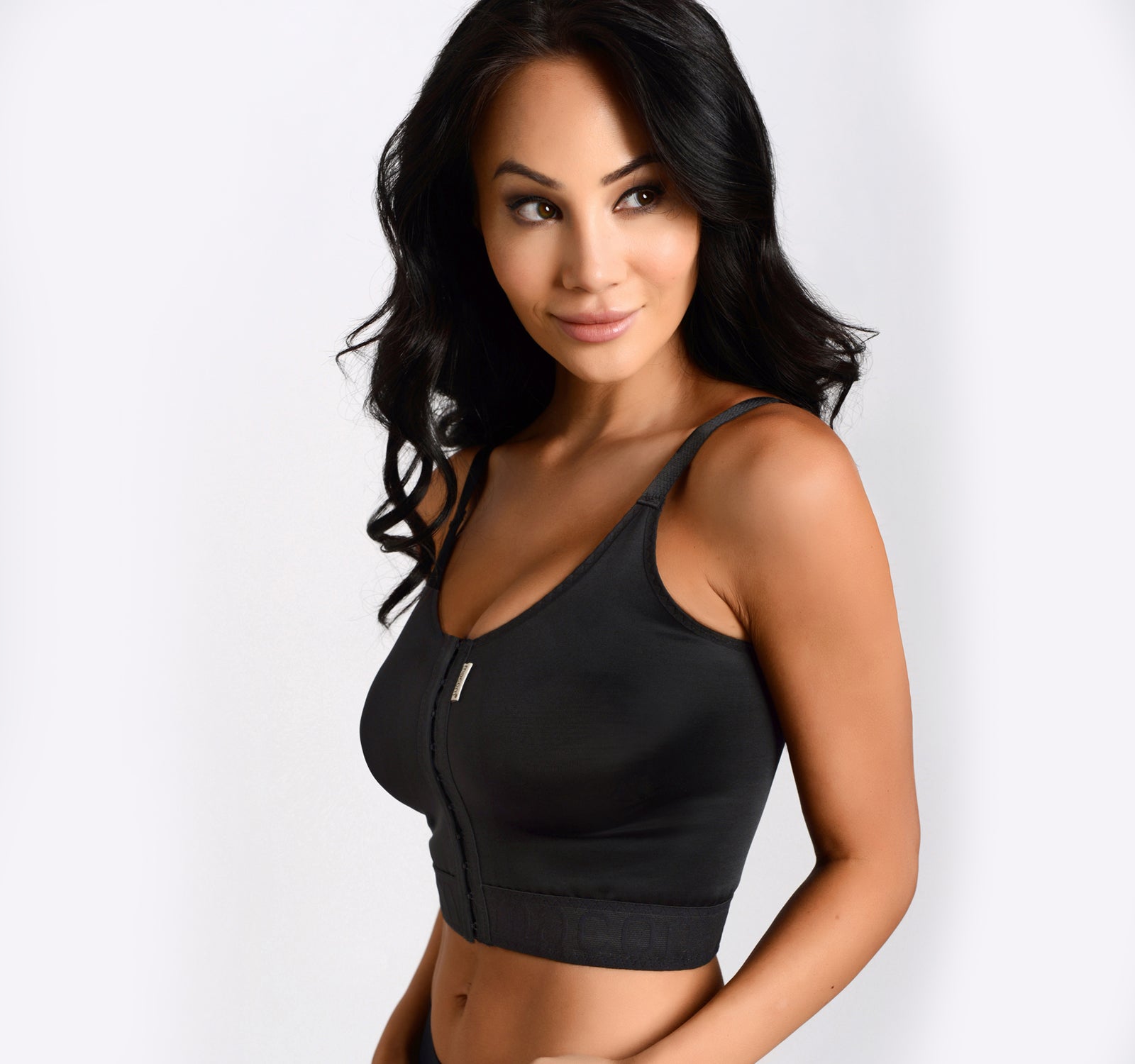
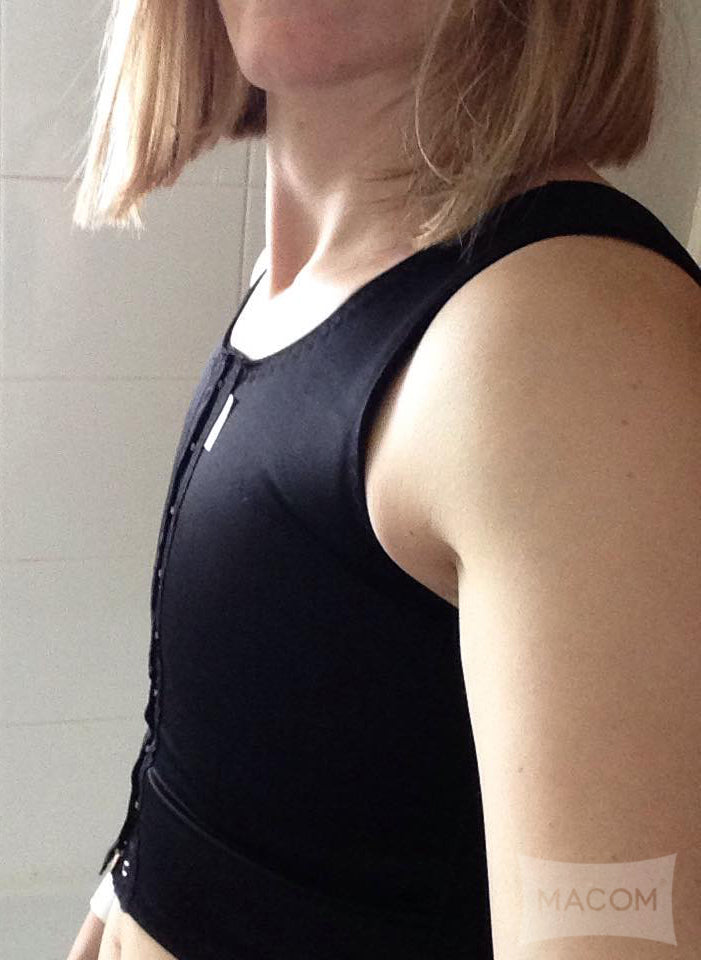
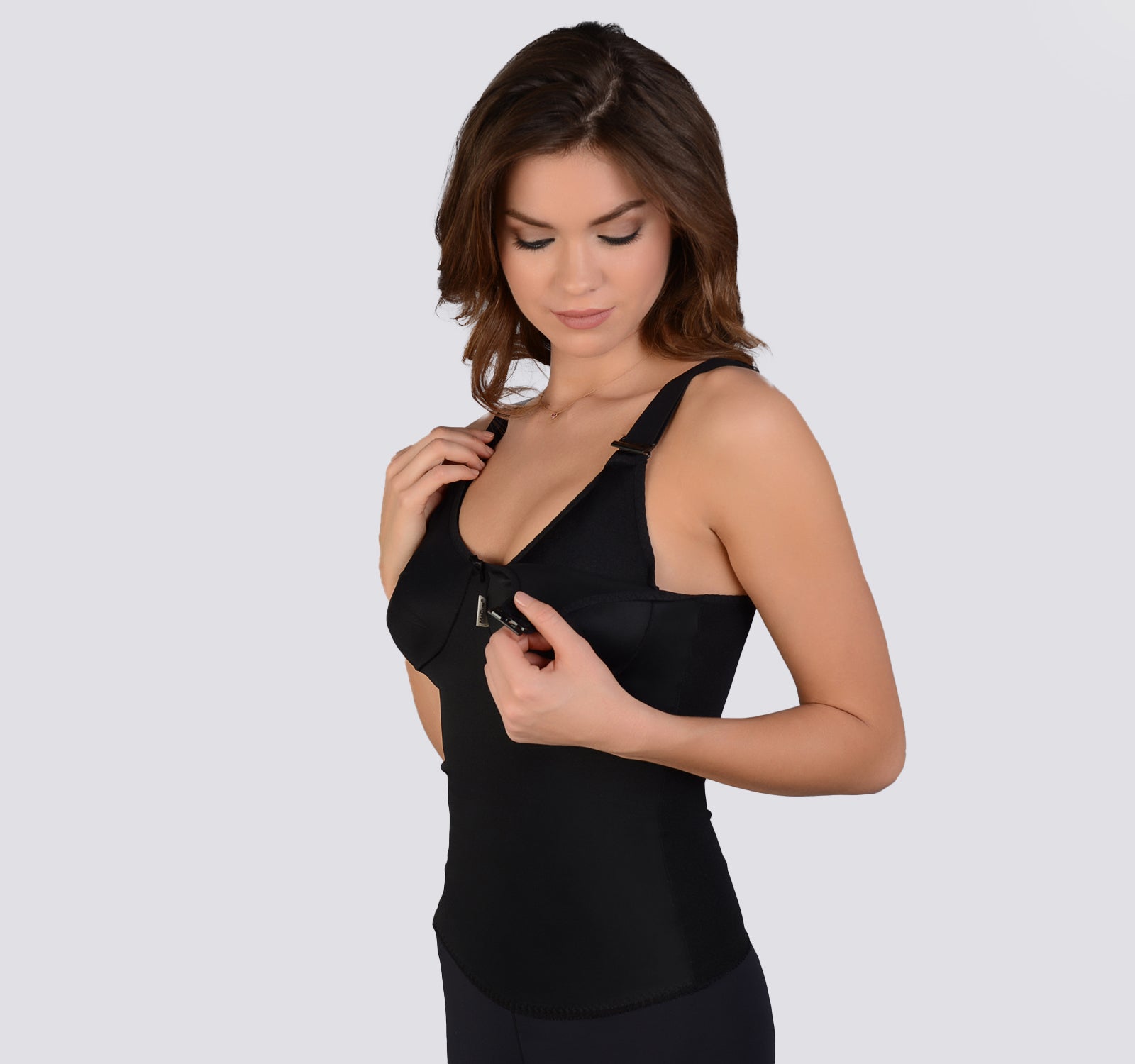
- Front fastening to facilitate independence and comfort during recovery.
- A wide underband to spread pressure
- Soft seams and smooth fabrics near incision sites
- Non wired support until your surgeon says underwires are fine, to avoid rubbing the scar and causing pain
Compression bras can help manage swelling by applying gentle, consistent pressure. Our post-surgical bras focus on stable bands, soft fabrics and easy adjustability for recovery. Compression means steady support, not squeezing. Follow your surgeon’s guidance on wear time and tightness.
4) Care for your bras so they keep their grip
Heat and harsh washing break down elastic in bras. Wash gently in cool water, avoid tumble drying and rotate bras so the elastic can recover between wears.
5) Replace bras that can no longer hold shape
Even great bras wear out. If you wear a bra most days, replacing it every 6 to 12 months is common. You may need to replace a post surgical bra sooner if you wash it frequently.
Replace your bra if the band feels loose on the tightest hooks, the bra rides up no matter what you do, or the fabric looks stretched.
A quick post surgery fit check
In the first few weeks, comfort can change during the day. We suggest doing a short check each time you put your compression bra on, especially before a walk or a longer outing.
- Look in a mirror and confirm the band is level.
- Check for ‘hot spots’, meaning small areas of rubbing that feel sharper than general tightness.
- After 30 minutes, take a quick look for deep red marks that do not fade. Mild marking is common, but anything that feels painful needs attention.
Small adjustments done early can prevent a long afternoon of pulling your bra down and wondering why you feel so uncomfortable.
FAQs
Why do I always have to pull my bra down?
If you are constantly pulling your bra down, the band is not anchoring. In most cases the band is too loose, and tightening straps is lifting it further. Start by checking your band size and loosening straps slightly. During recovery, swelling can change fit week to week, so a more adjustable bra can make this problem disappear.
Why does my bra feel tight?
‘Tight’ can mean the compression bra is doing its job, especially if you are used to a loose fit. If the breasts are squeezed then the bra is too small so consider a different size or style to find a more suitable fit.
After surgery, swelling and tenderness can make a normal fit feel too much. A supportive compression bra will help to minimise any discomfort and improve healing.
Find the right fit with macom®
If your bra band keeps rolling up, treat it as useful feedback. It is your body telling you the fit is not anchored where it needs to be. With the right band size, a sensible strap adjustment and a supportive style that suits your shape and stage of recovery, you can get back to feeling secure, comfortable and properly supported.
If you are preparing for breast surgery or already recovering, take a look at our range of post surgical compression bras. They are designed to support your healing, feel gentle against sensitive skin and give consistent support as swelling changes. If you have any questions about sizing, fit or which style is likely to work best for you, get in touch with us. We are happy to help you find the right option for your recovery.